THE FRAMEWORK
The Reconnection Model®
An approach that treats the trauma driving the behavior — not just the behavior itself. Built by Dr. Michael Barta on years of clinical practice and the TINSA® model that preceded it.
The Old Way
Managing the symptoms
Behavioral models put the burden on you to contain or manage behaviors. But managing symptoms is not the same as healing — the underlying disconnection remains.
Healing the root cause
Works directly with the brain and nervous system to identify and heal the trauma and disconnection driving the behavior — creating change at the root level.
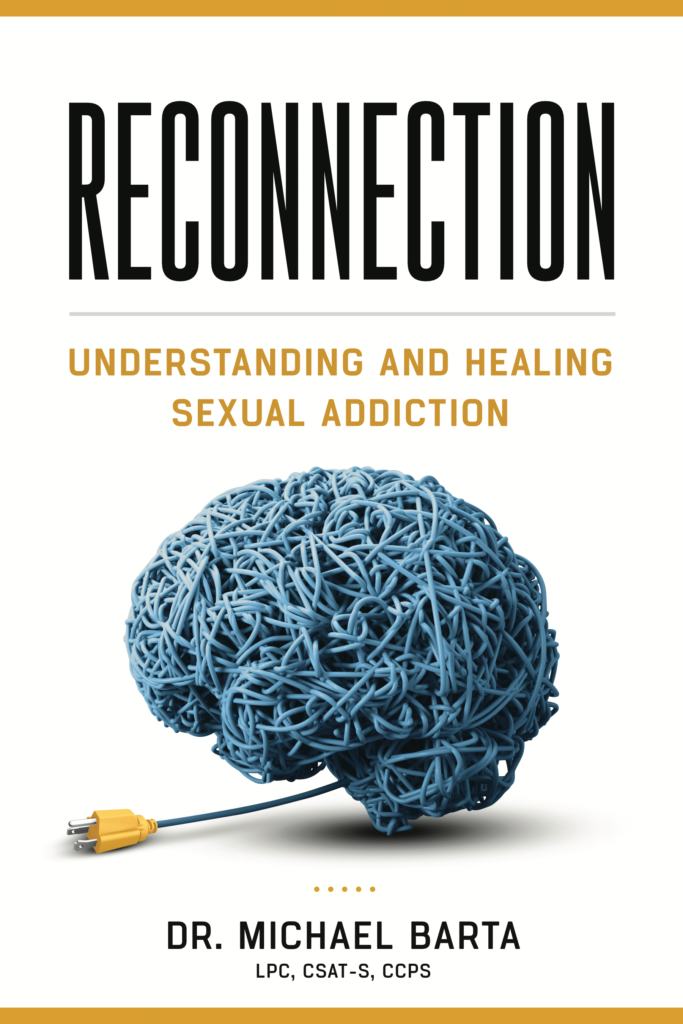
FREE BOOK
Reconnection: Understanding and Healing Sexual Addiction
The foundational text on the Reconnection Model®, explaining how trauma drives sexual addiction and how working with the brain and nervous system creates lasting change.
Download it right away, plus occasional updates from Dr. Barta.
THE APPROACH
Healing the Nervous System, Not Just the Behavior
Sexual addiction rarely begins with a lack of willpower. It develops as the brain and nervous system learn to use compulsive behaviors to survive emotional pain, unmet attachment needs, trauma, chronic stress, and overwhelming life experiences. Simply stopping the behavior rarely changes the deeper patterns that continue to drive it.
During the Intensive, Dr. Michael Barta works directly with your nervous system to help you understand the experiences that shaped your protective patterns. Rather than focusing only on your sexual behaviors, this work helps you identify the underlying wounds and adaptations that led your brain and nervous system to seek relief through compulsive sexual behaviors.
As part of this process, participants receive two Brainspotting sessions, an evidence-informed approach that helps access and process trauma held in the deeper, nonverbal areas of the brain. These sessions often allow healing to occur at a level that traditional talk therapy alone cannot reach, helping reduce the emotional intensity that has fueled compulsive behaviors for years.
The goal is not simply to stop acting out. The goal is to begin healing the nervous system so recovery becomes more natural, sustainable, and lasting.
The Intensive Includes
Brainspotting
Access deeper, nonverbal patterns stored in the brain that continue to drive compulsive behaviors and begin processing the experiences that created them.
Nervous System Mapping
Identify how trauma, attachment wounds, and unmet developmental needs shaped the protective patterns that have kept the addiction alive.
Root Cause Healing
Move beyond symptom management by addressing the underlying experiences that created the need for addictive behaviors in the first place.